Tuesday, February 22, 2011

Bubbly Creek

Bubbly Creek is the nickname given to the South Fork of the Chicago River's South Branch, which runs entirely within the city of Chicago, Illinois. Gases bubbling out of the riverbed from the decomposition of blood and entrails dumped into the river by the local stockyards in the early 20th century give the creek its name. It was brought to notoriety by Upton Sinclair in his exposé on the American meat packing industry entitled The Jungle.

Meatpackers dumped waste, such as blood and entrails, into the nearest river. The creek received so much blood and offal that it began to bubble methane and hydrogen sulfide gas from the products of decomposition:

“ "Bubbly Creek" is an arm of the Chicago River, and forms the southern boundary of the Union Stock Yards; all the drainage of the square mile of packing-houses empties into it, so that it is really a great open sewer a hundred or two feet wide. One long arm of it is blind, and the filth stays there forever and a day. The grease and chemicals that are poured into it undergo all sorts of strange transformations, which are the cause of its name; it is constantly in motion, as if huge fish were feeding in it, or great leviathans disporting themselves in its depths. Bubbles of carbonic gas will rise to the surface and burst, and make rings two or three feet wide. Here and there the grease and filth have caked solid, and the creek looks like a bed of lava; chickens walk about on it, feeding, and many times an unwary stranger has started to stroll across, and vanished temporarily. The packers used to leave the creek that way, till every now and then the surface would catch on fire and burn furiously, and the fire department would have to come and put it out. Once, however, an ingenious stranger came and started to gather this filth in scows, to make lard out of; then the packers took the cue, and got out an injunction to stop him, and afterwards gathered it themselves. The banks of "Bubbly Creek" are plastered thick with hairs, and this also the packers gather and clean. ”
- Upton Sinclair, The Jungle

The creek has remained toxic to the present day; a resident in the 1950s and '60s remembers the air being "rancid". While the area has been increasingly occupied by residential development such as Bridgeport Village, some wildlife and vegetation has returned in recent decades. A program to oxygenate the creek by continuously injecting compressed air into the water has met with limited success: The creek's odor is much reduced, and fish now venture there.

From: http://en.wikipedia.org/wiki/Bubbly_Creek


Tuesday, February 15, 2011

Colton Harris-Moore

Colton A. "Colt" Harris-Moore (born March 22, 1991) (age 19) is a former fugitive from Camano Island, Washington. Harris-Moore is suspected of being responsible for approximately 100 thefts in Washington, Idaho, and Canada, including bicycles, automobiles, light aircraft, and speedboats. It is believed that he learned how to fly small planes by reading aircraft manuals and handbooks and playing flight simulator computer games. One plane he stole was a Cessna 182 belonging to KZOK-FM radio personality Bob Rivers, valued at US$150,000. The plane was later recovered from the Yakama Indian Reservation, though it was so badly damaged that it was a total loss.

According to sheriffs, he would often slip into a home just to soak in a hot bath or steal ice cream from the refrigerator. Initially, he would steal only what he needed for living in the woods as a survivalist. Once, he allegedly used a homeowner's computer and credit card to order bear mace and a pair of US$6,500 night vision goggles.

On July 4, 2010, a Cessna 400 single-engine plane was reported stolen from the Bloomington, Indiana airport – it was later found crashed in the shoreline waters of Great Abaco Island in the Bahamas, again leading to speculation that Harris-Moore was responsible. Shortly afterward, there were several break-ins reported across the island. The Royal Bahamas Police Force placed wanted posters across the island that featured the teenager. One bartender claimed to have spotted him in a sports bar on Tuesday, July 6, 2010, stating that he drank a beer and left after five minutes. He says that Harris-Moore was wearing a cap over his shaved head and was barefoot.

On July 11, 2010, Harris-Moore was captured just before dawn at Harbour Island, Bahamas. Local officers picked up his trail in Eleuthera after recovering a 44 foot power boat stolen from a marina on Great Abaco. A police official said the suspect attempted to flee, but police shot out the engine on his boat. He told the police that he intended to go to Cuba to throw authorities off his trail and proceed to the Turks and Caicos Islands.

Harris-Moore pleaded guilty on July 13, 2010 to illegal entry to the Bahamas and illegally landing a plane. He was sentenced to three months in jail or a $300 fine. Harris-Moore's mother wired the money to the U.S. Embassy in Nassau, which in turn paid the fine. He was deported the same day via overnight commercial flight, accompanied by Bahamian authorities and United States agents of the FBI to Miami, Florida.

From: http://en.wikipedia.org/wiki/Colton_Harris-Moore


Thursday, February 10, 2011

1958 Tybee Island B-47 Crash

The Tybee Island B-47 crash was an incident on February 5, 1958, in which the United States Air Force lost a 7,600-pound Mark 15 hydrogen bomb in the waters off Tybee Island near Savannah, Georgia, USA. During a practice exercise the B-47 bomber carrying it collided in midair with an F-86 fighter plane. To prevent a detonation in the event of a crash and to save the aircrew, the bomb was jettisoned. Following several unsuccessful searches, the bomb was presumed lost somewhere in Wassaw Sound off the shores of Tybee Island.

The B-47 bomber was on a simulated combat mission from Homestead Air Force Base in Florida. It was carrying a single 7,600-pound bomb. At about 2:00 AM, the B-47 collided with an F-86. The F-86 crashed after the pilot ejected from the plane, but the B-47, despite being damaged, remained airborne, albeit barely. The crew requested permission to jettison the bomb in order to reduce weight and prevent the bomb exploding during an emergency landing. Permission was granted and the bomb was jettisoned at 7,200 feet while the bomber was traveling about 200 knots (370 km/h). The crew did not see an explosion when the bomb struck the sea. They managed to land the B-47 safely at Hunter Army Air Field.

Starting on February 6, 1958, the Air Force 2700th Explosive Ordnance Disposal Squadron and 100 Navy personnel equipped with hand held sonar and galvanic drag and cable sweeps mounted a search for the bomb. On April 16, 1958 the military announced that the search efforts had been unsuccessful. Based upon a hydrologic survey, the bomb was thought by the Department of Energy to lie buried under 5 to 15 feet of silt at the bottom of Wassaw Sound.

In 2001, the United States Air Force conducted a study to determine whether the bomb posed a threat to residents of the surrounding area. The Air Force says with certainty that the bomb contains conventional explosives and highly enriched uranium, which could pose an environmental or proliferation threat. The Air Force determined that it was prudent to leave the bomb covered in mud at the bottom of the sea floor rather than disturb it and risk the potential of detonation or contamination.

The risk of corrosion of the alloy casing of the bomb is less if it is completely covered in sand. But if, due to the shifting strata in which it is buried, part of the alloy casing of the bomb is exposed to seawater, rapid corrosion could occur, as demonstrated in simulation experiments. Eventually, the highly enriched uranium could be leached out of the device and enter the aquifer that surrounds the continental shelf in this area. Frequent storms, hurricanes, and strong currents frequently change the sands of the continental shelf near Tybee Island.

From: http://en.wikipedia.org/wiki/1958_Tybee_Island_B-47_crash


Tuesday, February 1, 2011

Shirime

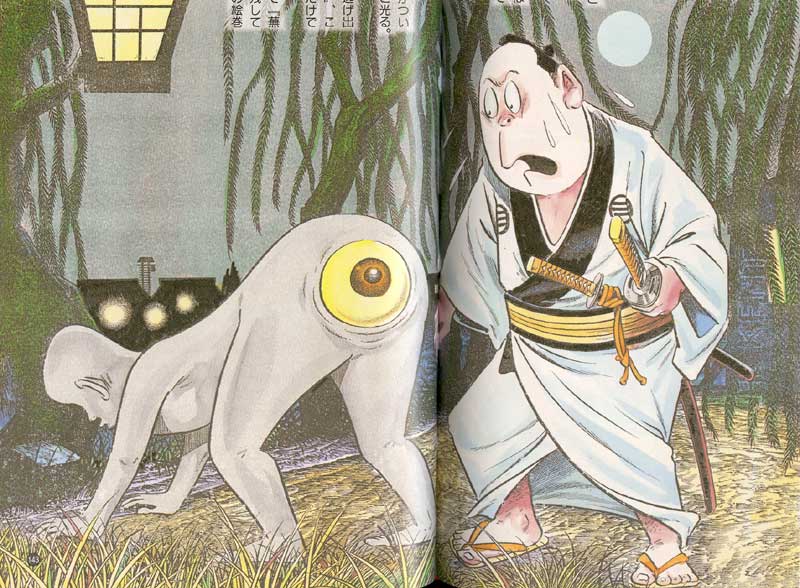
Shirime is a strange yōkai (literally demon, spirit, or monster) with an eye in the place of his anus. The story goes as follows: Long ago, a Samurai was walking at night down the road to Kyōto, when he heard someone calling out for him to wait. "Who's there?!" he asked nervously, only to turn around and find a man stripping off his clothes and pointing his bare buttocks at the flabbergasted traveler. A huge glittering eye then opened up where the strange man's anus should have been. This creature was so liked by the haiku poet and artist Buson that he included it in many of his yōkai paintings.

From: http://en.wikipedia.org/wiki/Shirime


Thursday, January 27, 2011

Weird Wacky Tales Involving LSD

MKULTRA
Project MKULTRA, or MK-ULTRA, was the code name for a covert, illegal CIA human research program, run by the Office of Scientific Intelligence. This official U.S. government program began in the early 1950s, continuing at least through the late 1960s, and it used U.S. and Canadian citizens as its test subjects. The published evidence indicates that Project MKULTRA involved the use of many methodologies to manipulate individual mental states and alter brain functions, including the surreptitious administration of drugs and other chemicals, sensory deprivation, isolation, and verbal and sexual abuse.

Once Project MKULTRA officially got underway in April, 1953, experiments included administering LSD to CIA employees, military personnel, doctors, other government agents, prostitutes, mentally ill patients, and members of the general public in order to study their reactions. LSD and other drugs were usually administered without the subject's knowledge or informed consent, a violation of the Nuremberg Code that the U.S. agreed to follow after World War II.

The Deputy Director of the CIA revealed that over thirty universities and institutions were involved in an "extensive testing and experimentation" program which included covert drug tests on unwitting citizens "at all social levels, high and low, native Americans and foreign." Several of these tests involved the administration of LSD to "unwitting subjects in social situations." At least one death, that of Dr. Olson, resulted from these activities. The Agency itself acknowledged that these tests made little scientific sense. The agents doing the monitoring were not qualified scientific observers.
From: http://en.wikipedia.org/wiki/MKULTRA

Also see a related article on Operation Midnight Climax which I did an article on back in March of 2010:
http://weirdweeklywiki.blogspot.com/2010/03/operation-midnight-climax-operation.html


Tusko
Experiments with LSD have also been done on animals; in 1962, an elephant named Tusko died shortly after being injected with 297 mg, but whether the LSD was the cause of his death is controversial (due, in part, to a plethora of other chemical substances administered simultaneously).
From: http://en.wikipedia.org/wiki/Lysergic_acid_diethylamide


Cary Grant
On December 25, 1949, Grant married Betsy Drake. He appeared with her in two films. This would prove to be his longest marriage, ending on August 14, 1962. Drake introduced Grant to LSD, and in the early 1960s he related how treatment with the hallucinogenic drug —legal at the time— at a prestigious California clinic had finally brought him inner peace after yoga, hypnotism, and mysticism had proved ineffective. The couple divorced in 1962.
From: http://en.wikipedia.org/wiki/Cary_Grant


Dock Ellis
Dock Phillip Ellis, Jr. was a professional baseball player who pitched for the Pittsburgh Pirates, among other teams in Major League Baseball. His best season was 1971, when he won 19 games for the World Series champion Pirates and was the starting pitcher for the National League in the All-Star Game. However, he is perhaps best remembered for throwing a no-hitter in 1970 and later stating that he had done it while under the influence of LSD.
From: http://en.wikipedia.org/wiki/Dock_Ellis


Flipper (1963)
One "stunt" dolphin (one of several used in the film) is speared on screen in the peduncle. This is an actual spear-gunning of a live dolphin, not a special effect, which the producers could not afford. The dolphin appears in several subsequent scenes with Luke and the actress playing his mother, having "beached" itself with the spear still sticking out of its tail.

The unnamed dolphin survived this abuse. Producer Ivan Tors gave it to Dr. John C. Lilly, then of the Communication Research Institute in Miami. "It wouldn't come near us," Lilly later said. "I gave it 100 micrograms of LSD, and it was all over us." Tors told Lilly that the dolphin had been speared "by mistake" and that the scene was shot by a second unit without his direct knowledge. Lilly is credited in the film as "scientific adviser".
From: http://en.wikipedia.org/wiki/Flipper_(1963_film)


Tuesday, January 18, 2011

Violet Jessop

Violet Constance Jessop was an ocean liner stewardess and nurse who achieved fame by surviving the disastrous sinkings of sister ships RMS Titanic and HMHS Britannic in 1912 and 1916 respectively. In addition, she had been on board Titanic and Britannic's other sister ship, RMS Olympic, when it collided with the HMS Hawke in 1911.

At age 23, Violet Jessop boarded the RMS Olympic on October 20, 1910 to work as a stewardess. The Olympic was a luxury ship that was the largest civilian liner at that time, being nearly 100 feet longer than any other ship. Olympic's first major mishap occurred on 20 September 1911, when she collided with a British warship, HMS Hawke off the Isle of Wight. Although the incident resulted in the flooding of two of her compartments and a twisted propeller shaft.

Violet boarded the RMS Titanic as a stewardess on 10 April 1912 and four days later on 14 April, at around 23:40 the Titanic struck an iceberg and began to sink. Violet described in her memoirs that she was ordered up on deck because she was to set a good example to the foreign speaking people (they did not speak English) where she watched as the crew loaded the lifeboats. She was later ordered into lifeboat 16, and as the boat was being lowered, one of the Titanic's officers gave her a baby to look after. The next morning Violet and the rest of the survivors were rescued by the RMS Carpathia. According to Violet, while on board the Carpathia, a woman grabbed the baby she was holding and ran off with it without saying a word.

During World War I Violet served as a nurse for the British Red Cross. In 1916, she was on board His Majesty's Hospital Ship Britannic when the ship apparently struck a mine and sank in the Aegean Sea. While the Britannic was sinking she jumped out of a lifeboat to avoid being sucked into the Britannic's propellers. She was sucked under the water and struck her head on the ship's keel before being rescued by another lifeboat. She had also made sure to grab her toothbrush before leaving her cabin on the Britannic, saying later that it was the one thing she missed most immediately following the sinking of the Titanic.

Violet Jessop died of congestive heart failure in 1971.

From: http://en.wikipedia.org/wiki/Violet_Jessup


Tuesday, January 11, 2011

Bat Bombs

Bat bombs were bomb-shaped casings with numerous compartments, each containing a Mexican Free-tailed Bat with a small timed incendiary bomb attached. Dropped from a bomber at dawn, the casings would deploy a parachute in mid-flight and open to release the bats which would then roost in eaves and attics. The incendiaries would start fires in inaccessible places in the largely wood and paper construction of the Japanese cities that were the weapon's intended target.

Developed by the United States during World War II, four biological factors gave promise to this plan. First, bats occur in large number. Second, bats can carry more than their own weight in flight. Third, bats hibernate, and while dormant they do not require food or maintenance. Fourth, bats fly in darkness, then find secluded places to hide during daylight.

The plan was to release bat bombs over Japanese cities having widely-dispersed industrial targets. The bats would spread far from the point of release due to the relatively high altitude of their release, then at dawn they would hide in buildings across the city. Shortly thereafter built-in timers would ignite the bombs, causing widespread fires and chaos. The bat bomb idea was conceived by dental surgeon Lytle S. Adams, who submitted it to the White House in January, 1942, where it was subsequently approved by President Roosevelt.

It was envisioned that ten B-24 bombers flying from Alaska, each carrying a hundred shells packed with bomb-carrying bats could release 1,040,000 bat bombs over the target—the industrial cities of Osaka Bay. A series of tests to answer various operational questions were conducted. In one incident the Auxiliary Army Air Base in Carlsbad, New Mexico, was set on fire when armed bats were accidentally released. The bats incinerated the test range and roosted under a fuel tank. Following this setback, the project was relegated to the Navy in August 1943, who renamed it Project X-Ray, and then passed it to the Marine Corps that December. The Marine Corps moved operations to the Marine Corps Air Station at El Centro, California. After several experiments and operational adjustments, the definitive test was carried out on a mockup of a Japanese city built by the Chemical Warfare Service at their Dugway Proving Grounds test site in Utah.

More tests were scheduled for the summer of 1944 but the program was cancelled by Fleet Admiral Ernest J. King when he heard that it would likely not be combat ready until mid-1945. By that time it was estimated that $2 million had been spent on the project. It is thought that development of the bat bomb was moving too slowly, and was overtaken in the race for a quick end to the war by the atomic bomb project.

Dr. Adams maintained that the bat bombs would have been effective without the devastating effects of the atomic bomb. He is quoted as having said: “Think of thousands of fires breaking out simultaneously over a circle of forty miles in diameter for every bomb dropped. Japan could have been devastated, yet with small loss of life. ”

From: http://en.wikipedia.org/wiki/Bat_bombs